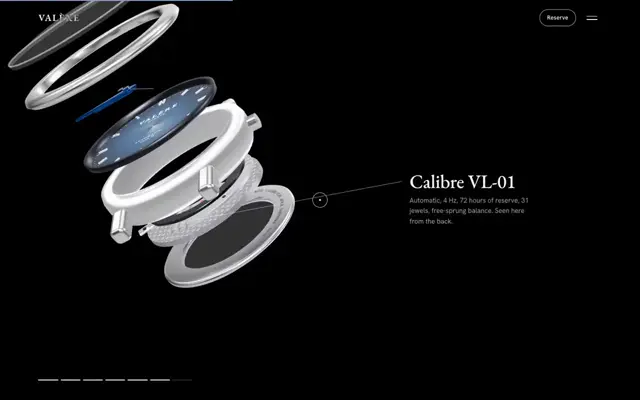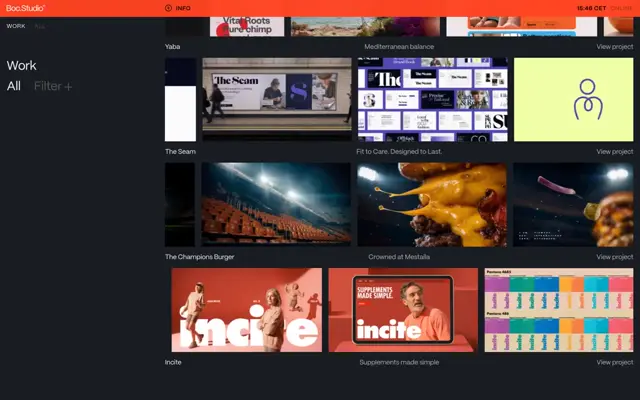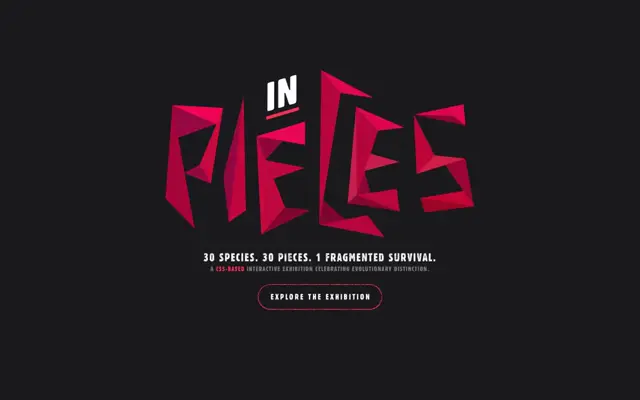
Adapt the diagonal horizon and oversized foreground object to establish scale, leaving a quiet corner for a bold two-line heading. Layer very thin connecting lines, crosshair nodes, and a restrained circular component marker over the imagery rather than enclosing information in cards. Keep the header sparse across overview and detail views; for a new subject, replace the spacecraft, environment, and component labels while preserving the contrast between cinematic imagery and precise technical annotation.
No creator prompt published. This brief was written by Reference.
Edolus
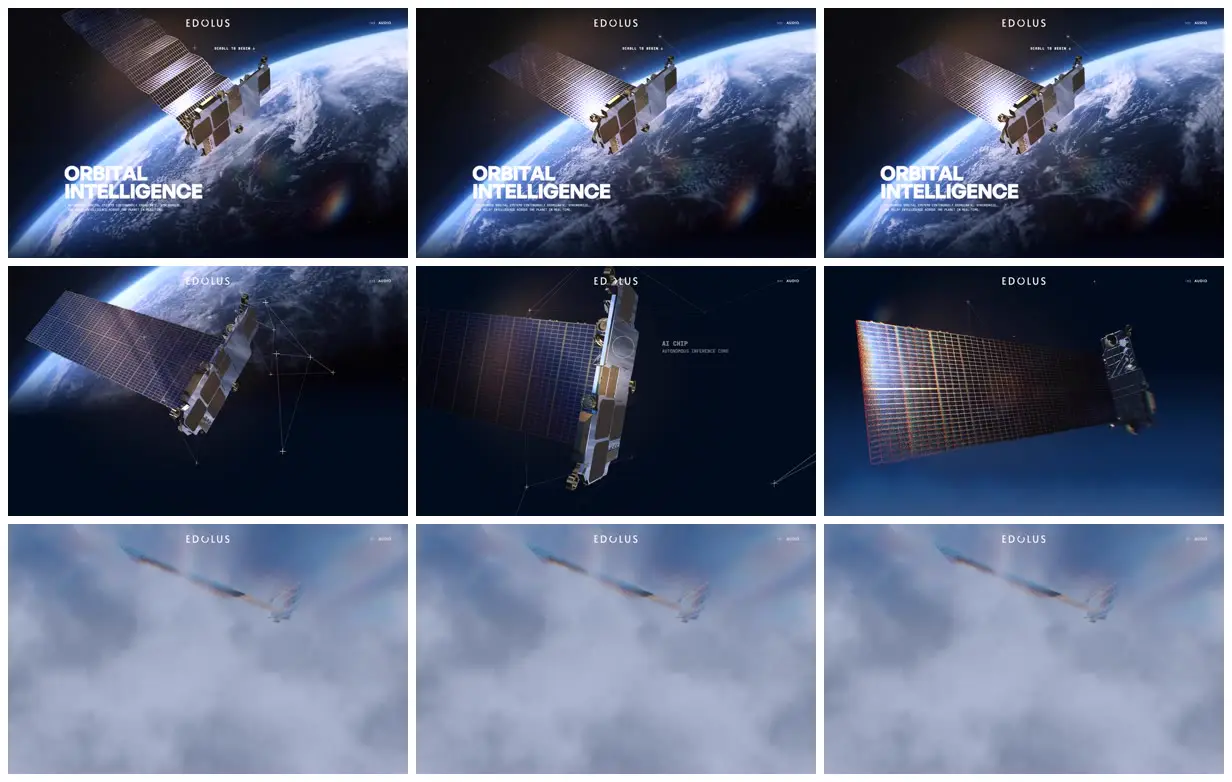
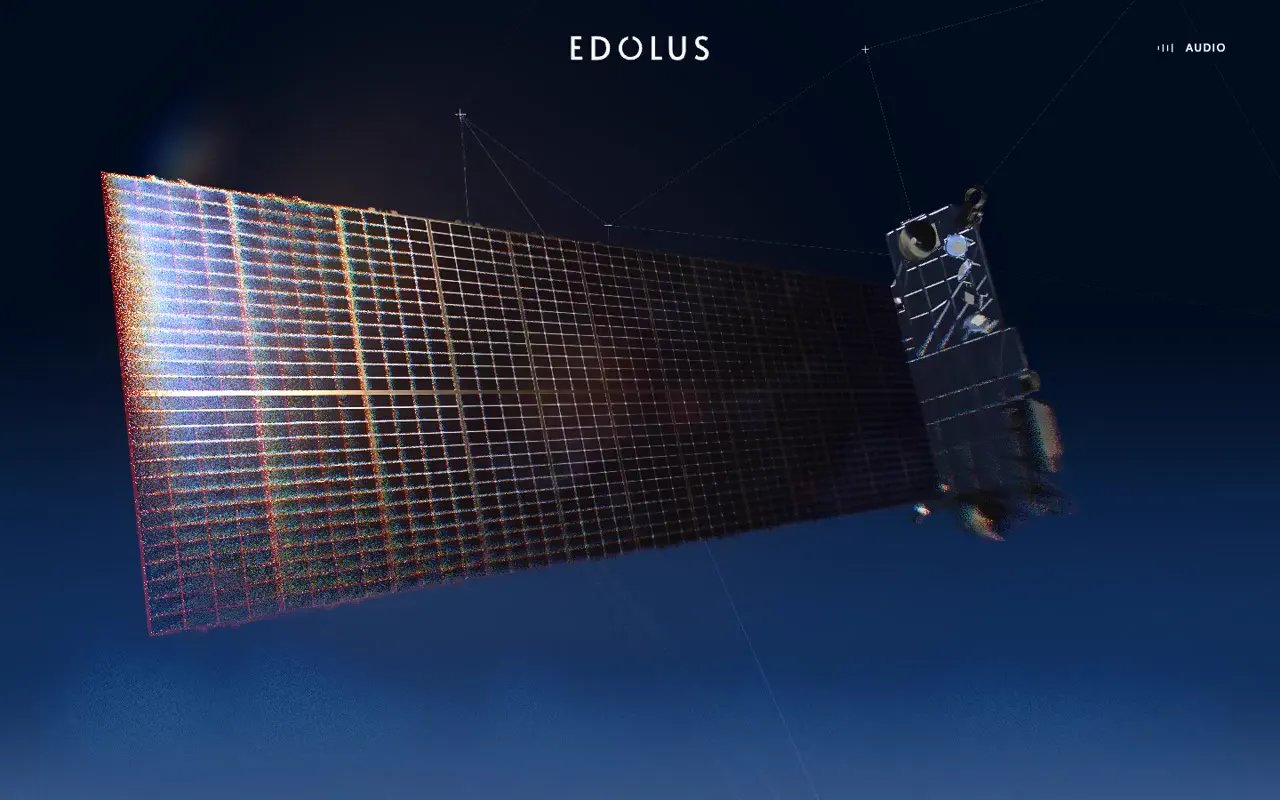
A full-screen orbital presentation shows a metallic satellite above Earth, followed by closer spacecraft views, an AI chip annotation, and a distant cloud-obscured view. Sparse white interface text and fine network lines overlay the scenes.
Source and credit
Authorship not stated by the source
Look notesby Reference
Cinematic, space-themed presentation of satellite technology and orbital intelligence.
- Color
- Deep navy and black, with blue atmospheric gradients, white text, and subtle iridescent grid accents.
- Type
- Minimal uppercase sans-serif typography; the main headline is large, bold, and white, with small, widely spaced branding.
- Framing
- Wide satellite and solar-panel imagery dominates the dark backgrounds. Headlines sit toward the lower left in the opening views, with generous negative space in the technical views.
- Structure
- A small EDOLUS wordmark anchors the top center across frames. The views alternate between a headline over Earth imagery and sparse satellite-focused layouts; later frames show a pale, cloudlike background with a small satellite near the upper center.