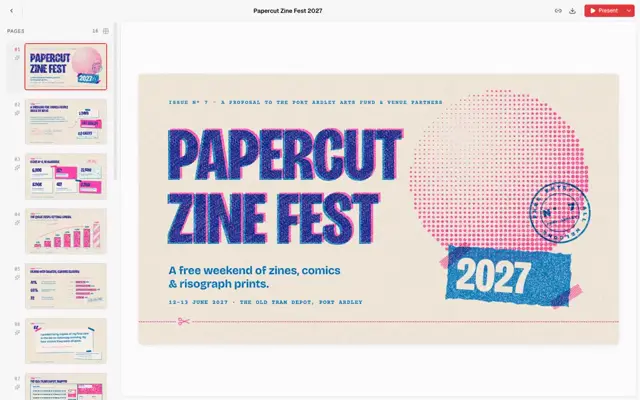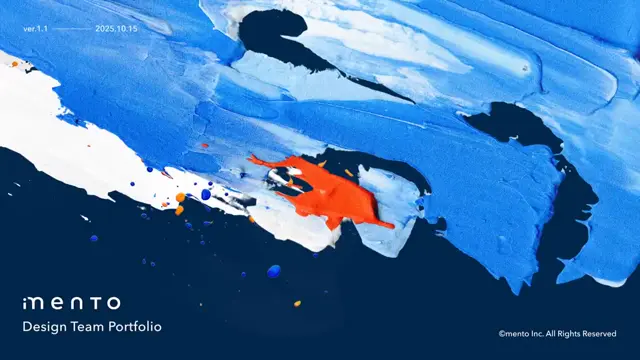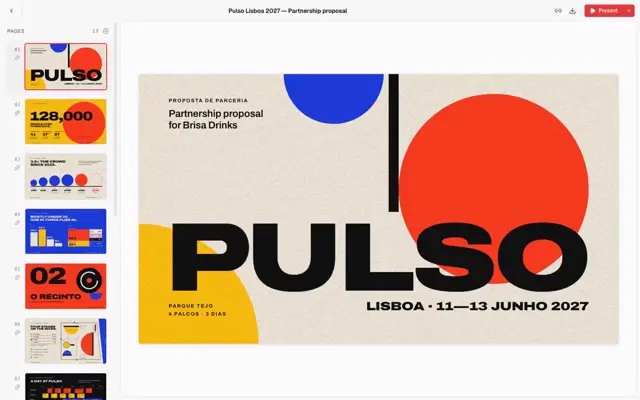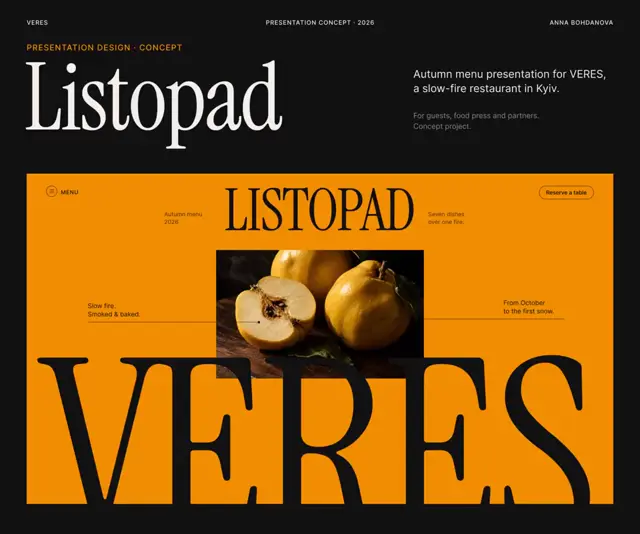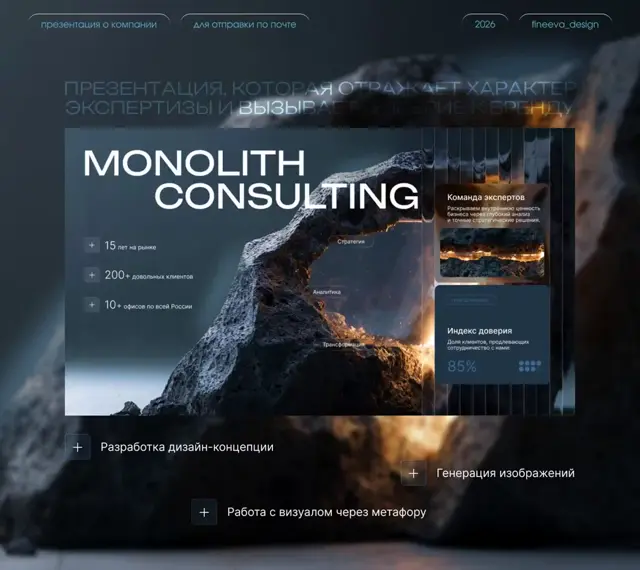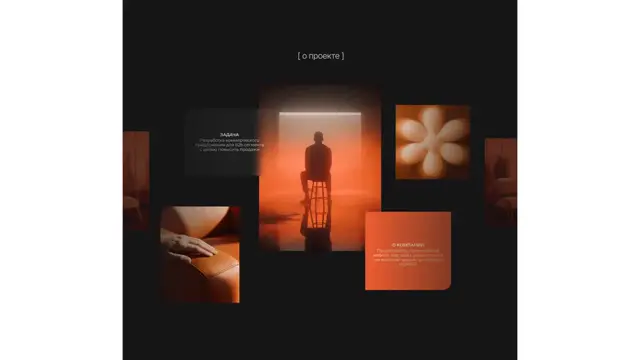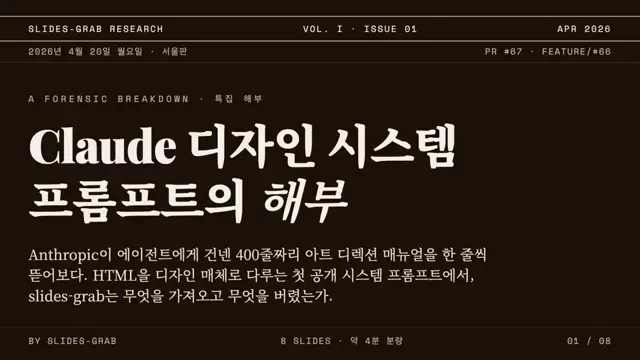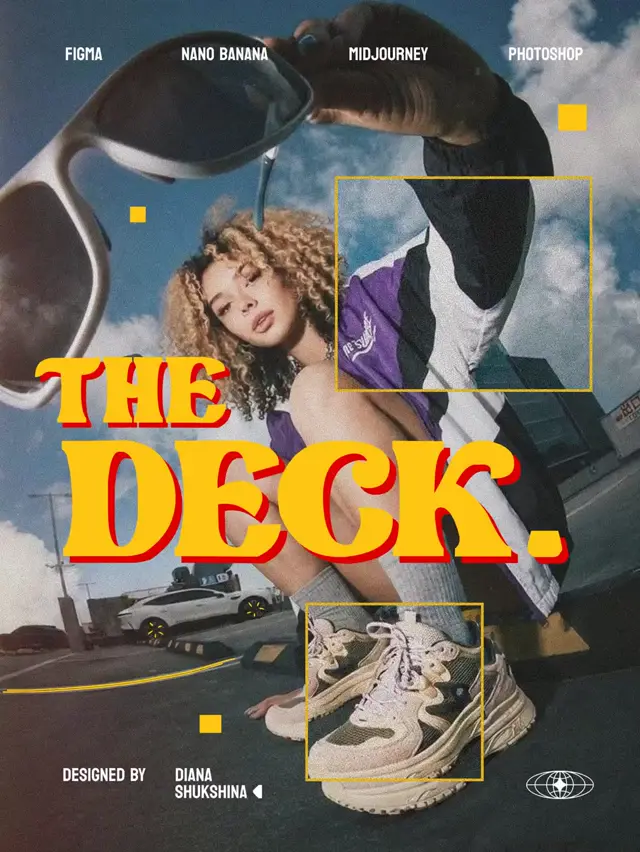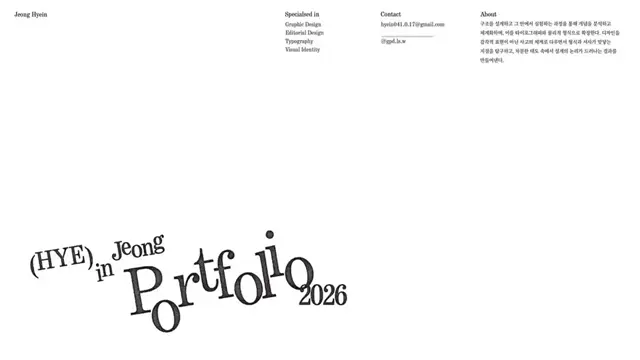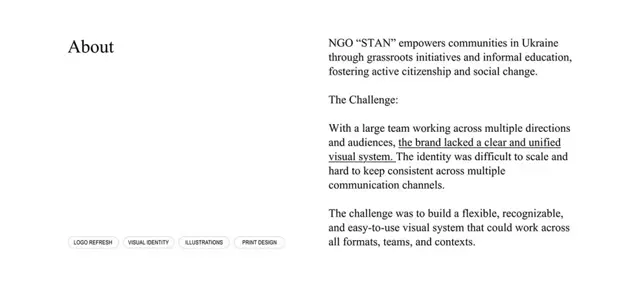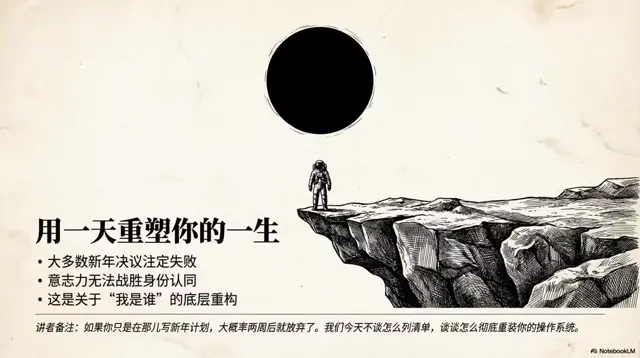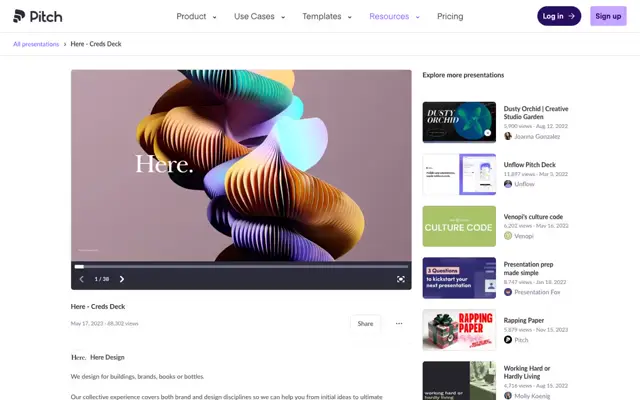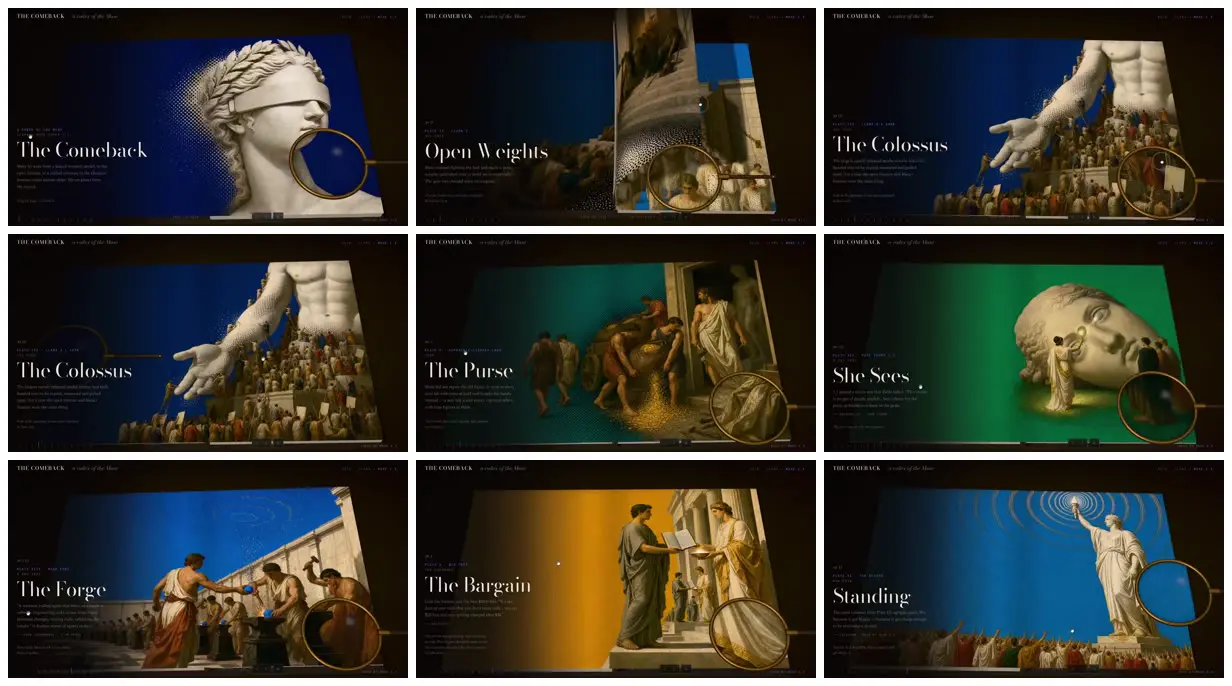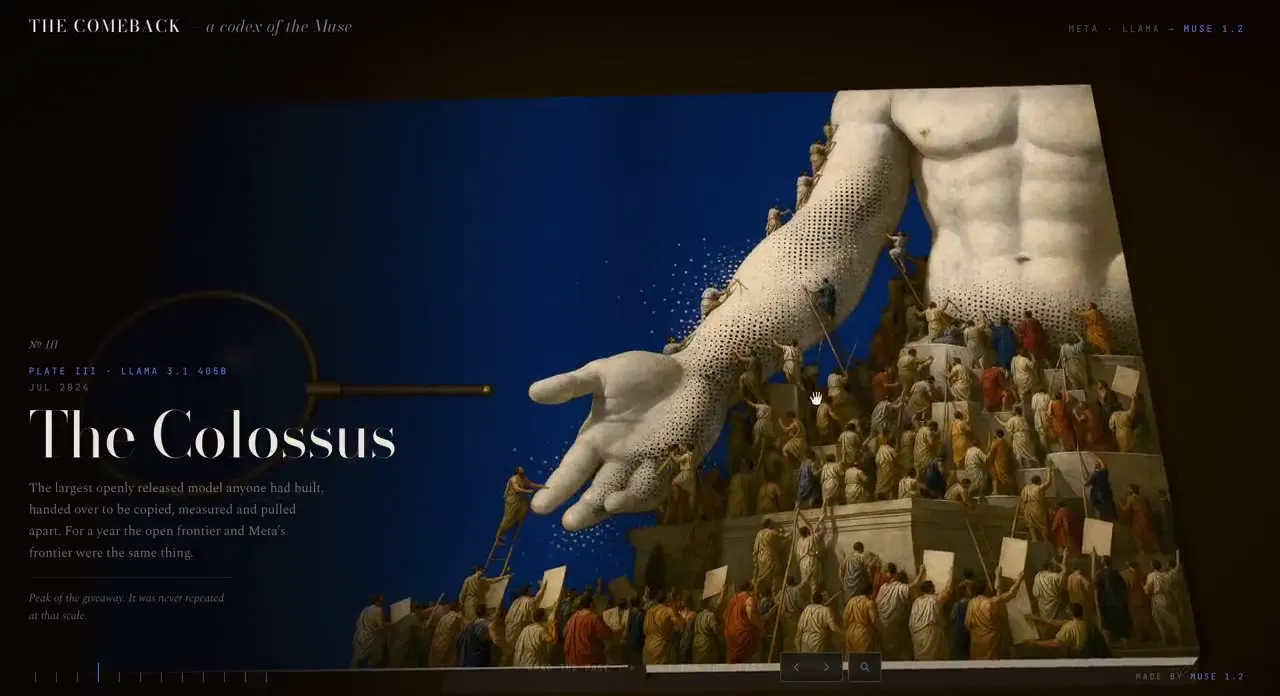
Build a sequence around a consistent left-side editorial hierarchy and large right-side narrative tableaux, using one symbolic scene per chapter rather than bullet lists. Pair pale sculptural forms with saturated backgrounds, then introduce halftone dissolves and a recurring circular detail lens to unify the imagery. Vary scene scale and background color while preserving plate labels and title placement. For a new subject, replace the technological milestones and classical allegories with relevant chapter-specific imagery, and increase body-text contrast.
No creator prompt published. Reference wrote this brief. Copy for agent includes the brief, visual reference links, and setup guidance.
A classical codex of technological change
A history of AI models drawn as illustrated codex plates: marble figures, robed crowds and workshops under short chapter titles, with halftone texture, curled pages and a recurring magnifying glass. Muse 1.2 made it, with images from GPT Image 2.
How it was made
'This beautiful presentation is by Muse 1.2. It used gpt-image-v2 to create the images by itself. I told it to make a history page from Llama to Muse 1.2'.
Muse 1.2 · GPT Image 2
Source and credit
X · Aug 7, 2026 · 261 likes · 24k views · 14 comments
Made with AI, according to the source
Look notesby Reference
A classical-art-inspired editorial deck pairing Greco-Roman sculpture and figures with contemporary digital collage.
- Color
- Deep navy and cobalt blue, teal and green, warm gold, black, and ivory marble.
- Type
- Large, high-contrast serif section titles with smaller restrained sans-serif text and interface labels.
- Framing
- Each section balances a dark text area with a prominent classical illustration, often using gradients, cropped figures, and circular detail callouts.
- Structure
- A sequence of titled editorial chapters, moving from a blindfolded bust and an open-weights scene through images of a colossus, a purse, a sculpted face, a forge, a bargain, and a standing statue.