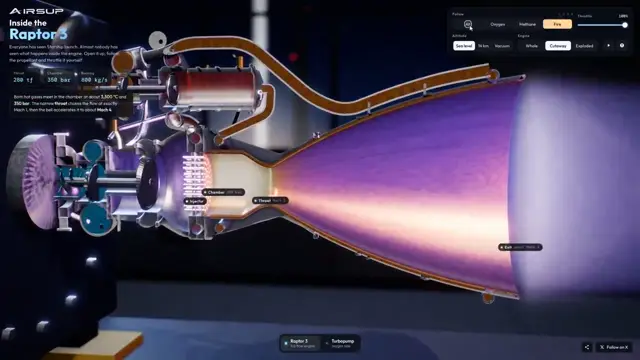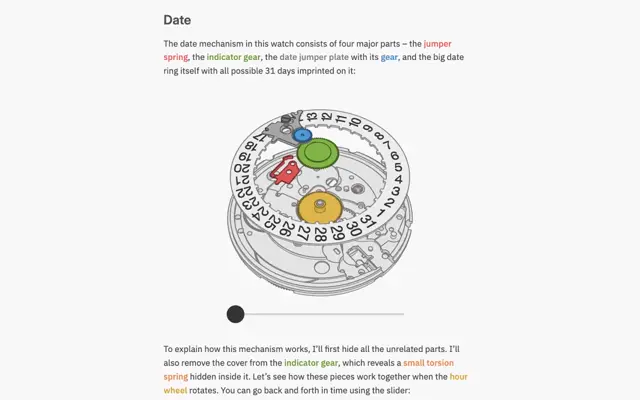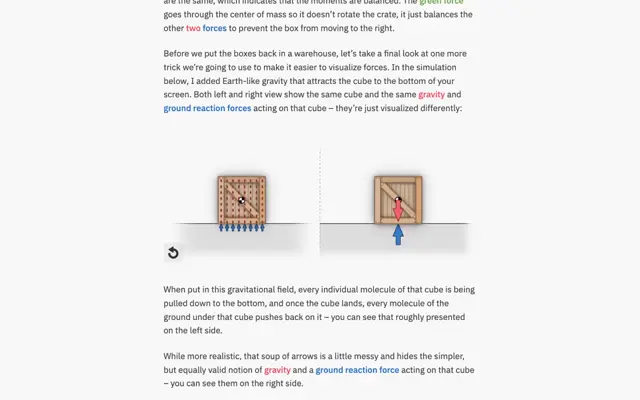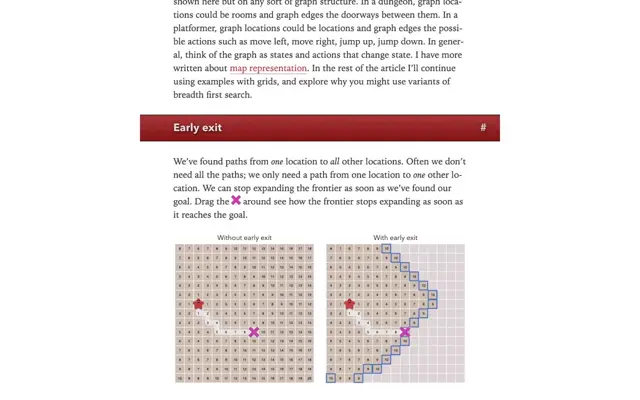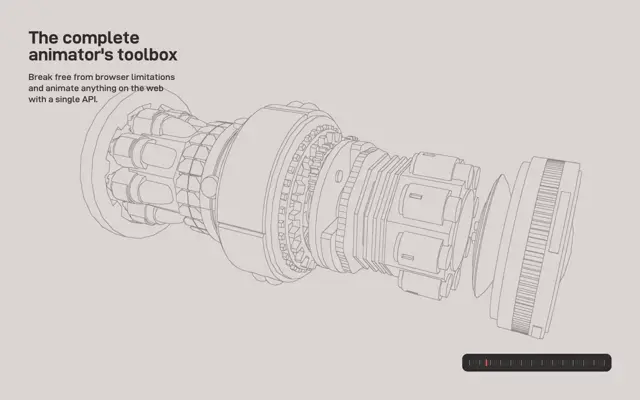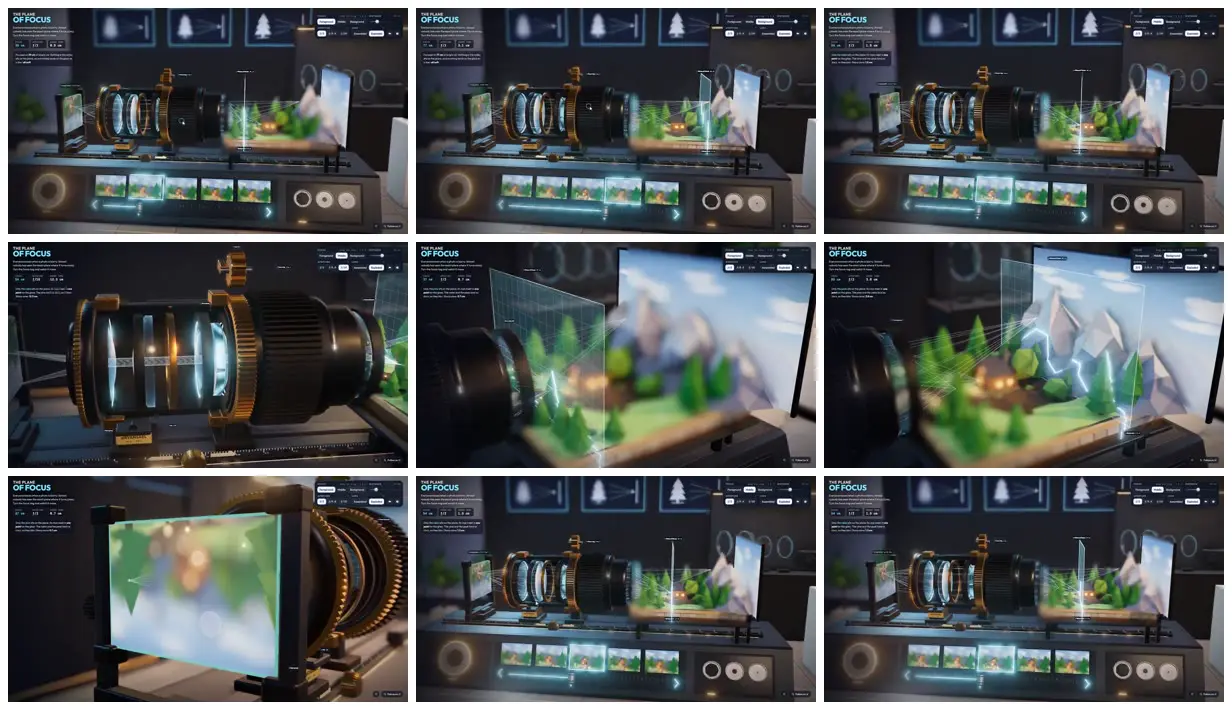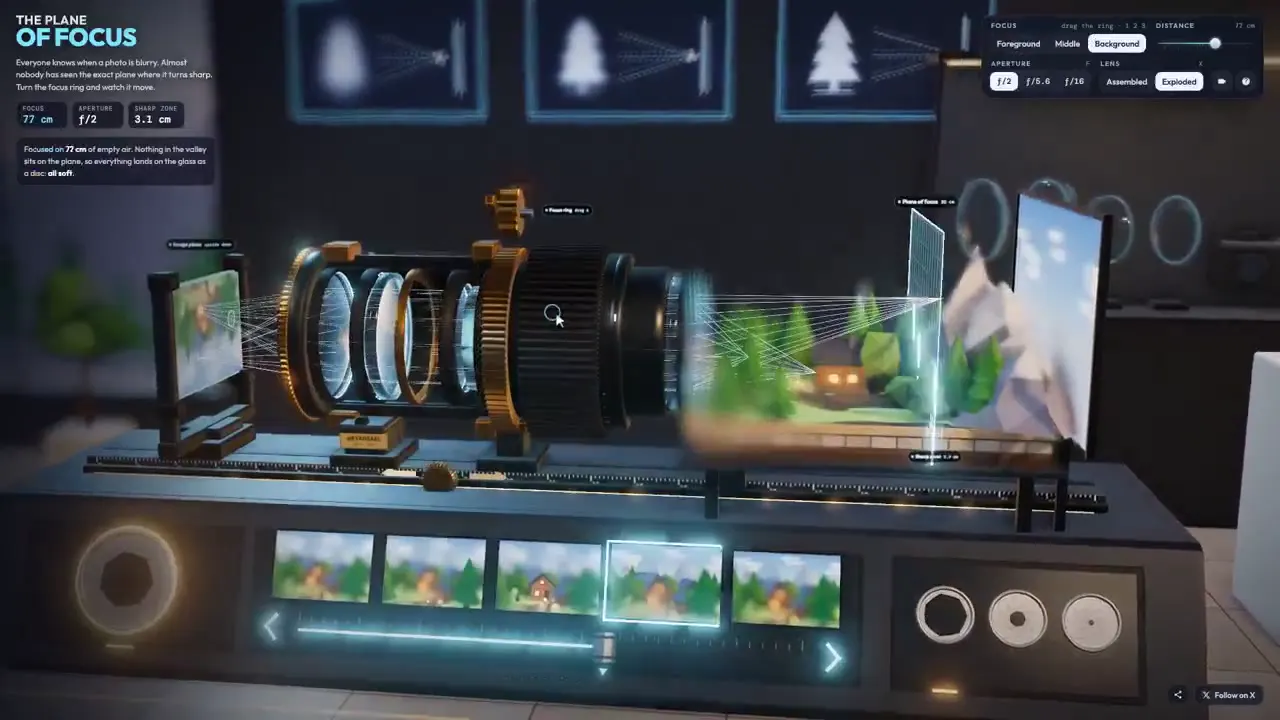
Build the explanation around a tangible apparatus, exposing internal components and overlaying thin ray lines and a translucent gridded plane. Pair the main scene with compact numerical readouts and a strip of image comparisons so parameter changes have several visible consequences. Use close-up inspection views alongside the full assembly; for a new subject, replace the lens and landscape with the relevant mechanism and test specimen while preserving the connection between controls, internal behavior, and observable results.
No creator prompt published. This brief was written by Reference.
Interactive camera lens lab
A three-dimensional optical workbench explains camera focus using an exploded lens, traced light rays, a movable focus plane, and a miniature mountain scene, with focus and aperture controls and comparative image previews.
- Claude Opus 5.5
- One-shot
- 1h 26m
- $25.66
How it was made
$25.66 API
Claude Opus 5.5
1 hour 26 minutes
Source and credit
X · Sep 23, 2026 · 16k likes · 3.5M views
Made with AI, according to the source
Look notesby Reference
Dark, polished technical simulation with glowing glass and light-ray diagrams.
- Color
- Deep navy and charcoal with cyan-blue highlights, white text, and warm amber accents.
- Type
- Small, clean sans-serif interface labels and controls; legibility is secondary to the diagrams at this scale.
- Framing
- A central horizontal lens apparatus anchors the overview screens, with control panels above and below; close-ups enlarge the lens and projected image.
- Structure
- Dashboard-style interface with repeated overview views and detailed views of the lens, light path, and image plane.