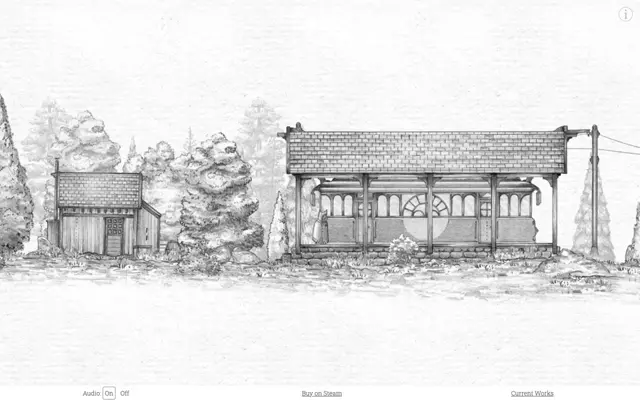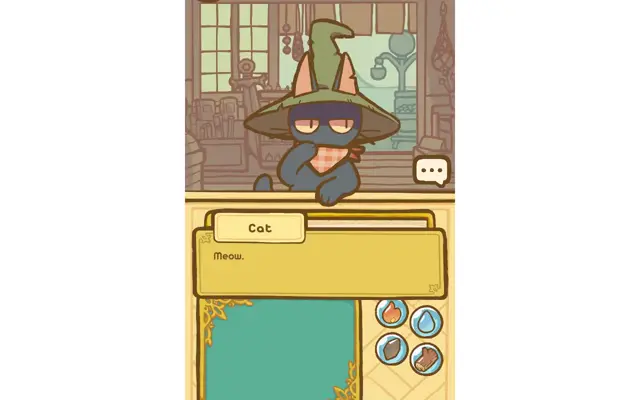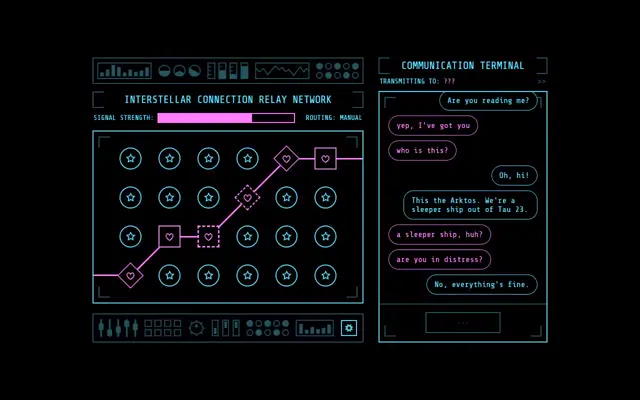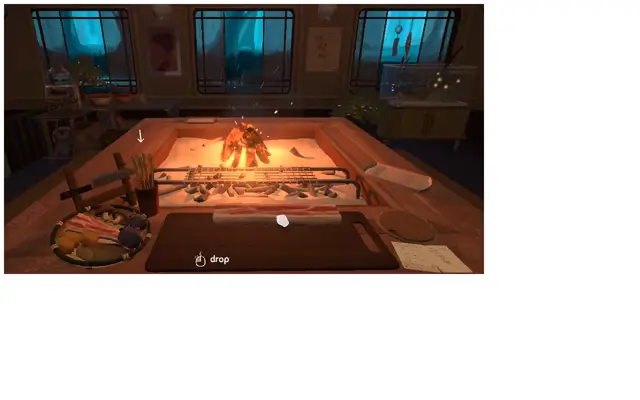
Build the interaction around a decorative central board with clearly separated sockets, keeping characters and their status badges on opposing sides. Use subdued environmental colors and heavy outlines so saturated tokens become the primary visual signals, and render inventory as a physical tray rather than a floating panel. For a new subject, replace the dungeon creatures, ornamental motifs, and token symbols while preserving the board–opponents–inventory hierarchy; increase contrast on secondary action labels.
No creator prompt published. This brief was written by Reference.
Pixel dungeon dice encounter
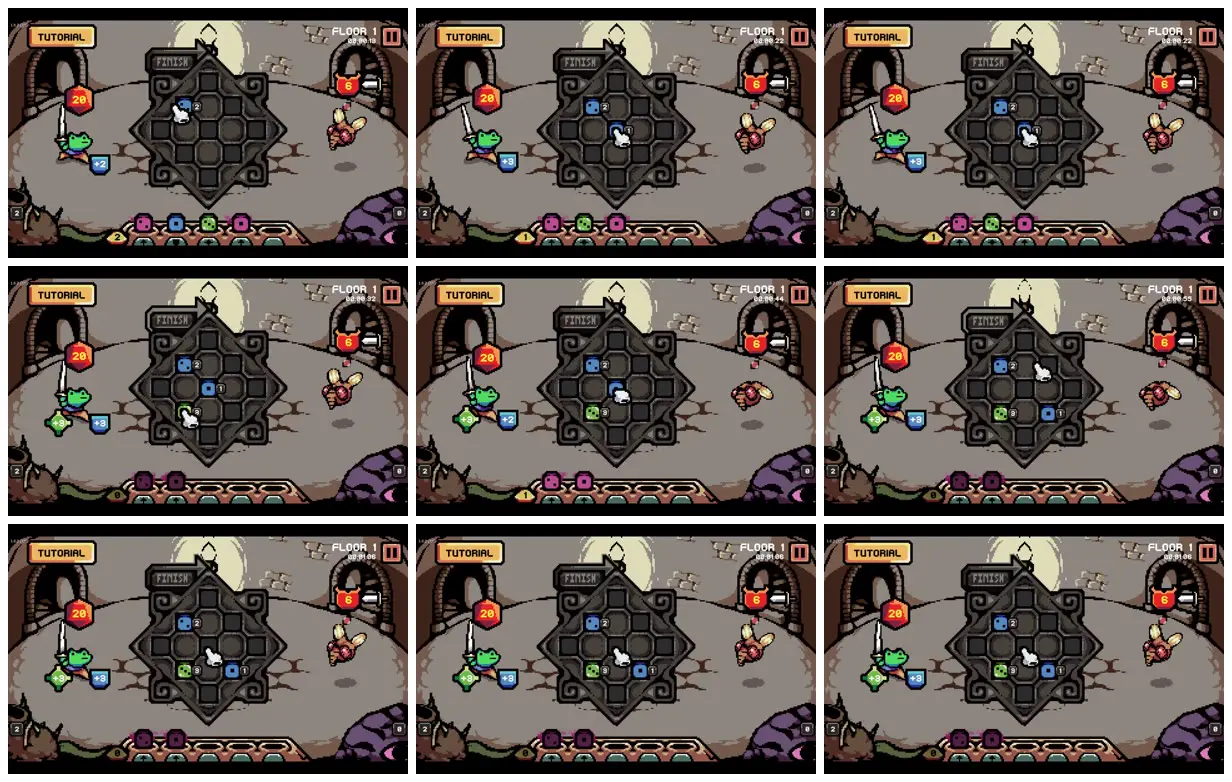
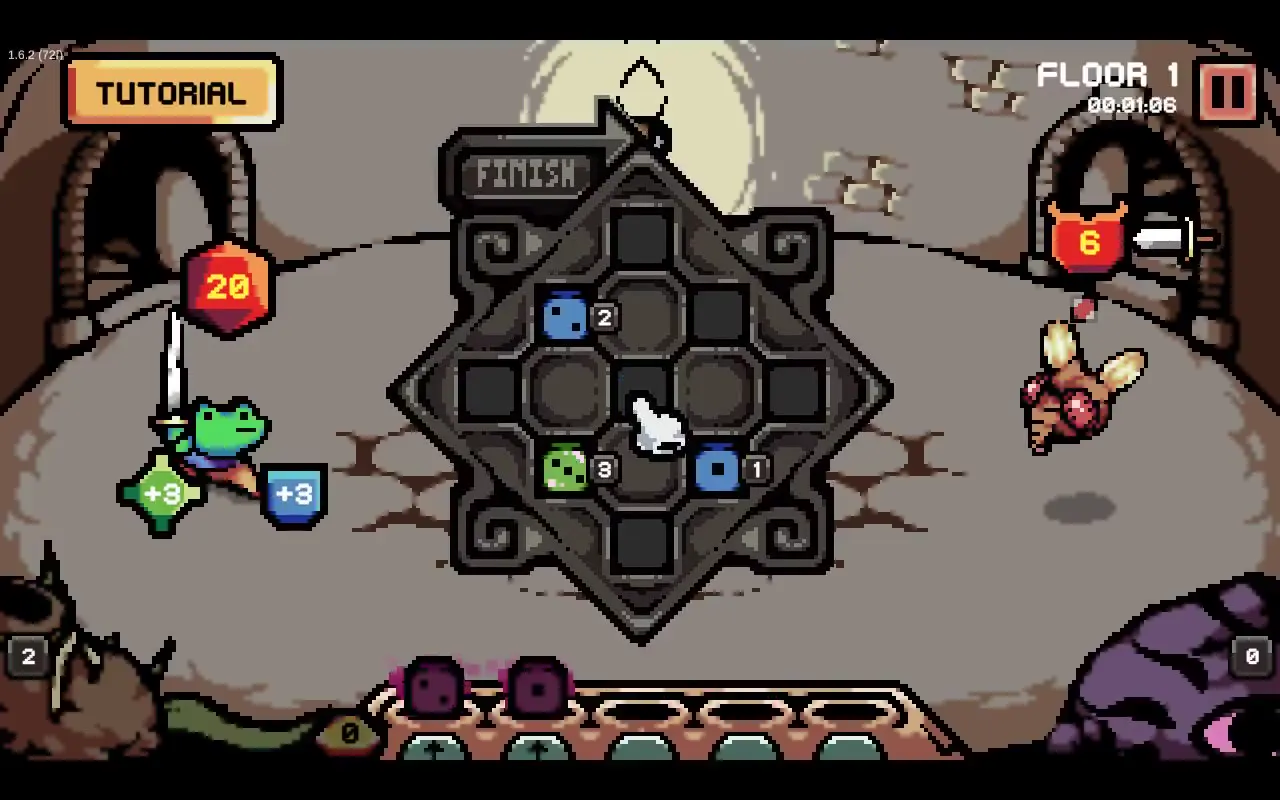
A frog swordsman faces a winged creature across an ornate diamond-shaped dice board. Colored dice move from a bottom tray into board sockets, while health, defensive bonuses, floor information, and turn controls surround the encounter.
Source and credit
Authorship not stated by the source
Look notesby Reference
Retro pixel-art dungeon gameplay with a prominent central board, numbered dice or tokens, and small character sprites.
- Color
- Dark charcoal outlines and gray stone surroundings, accented by bright cyan, green, magenta, yellow, and red.
- Type
- Pixel-art game graphics with blocky lettering and compact, outlined interface labels.
- Framing
- A repeated gameplay view fills each frame: a large diamond-shaped grid sits in the center, with characters and status elements around it.
- Structure
- The frames form a 3-by-3 contact sheet of similar gameplay screens. Each screen includes a tutorial label at upper left, floor and status indicators at upper right, the central grid, and a narrow item or token strip along the bottom.