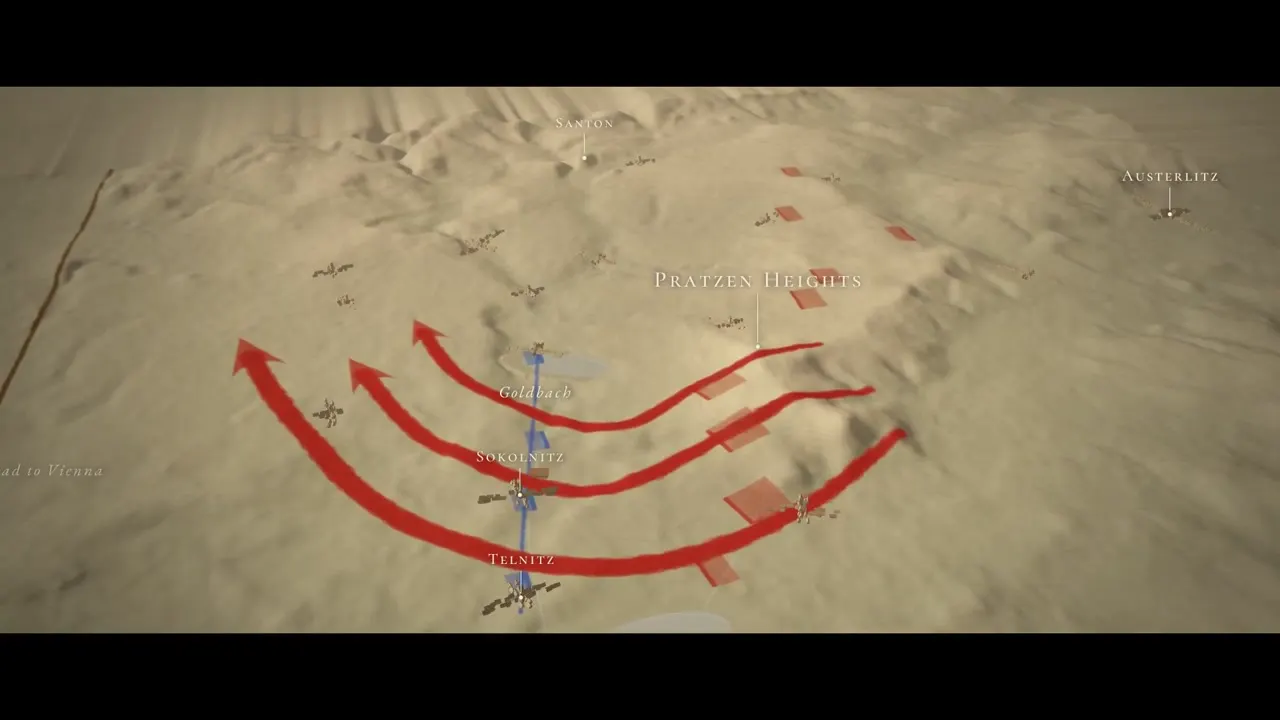
Create a 4–5 minute cinematic video about the Battle of Austerlitz (1805), built entirely in code.

Research the battle thoroughly and decide for yourself how to tell the story, structure the pacing, explain the strategy, and visualize the events. I want it to be historically accurate, dramatic, easy to understand, and visually exceptional.

Use the attached paintings as visual inspiration, not a strict style requirement. I love their scale, atmosphere, smoke, dramatic skies, cavalry, massed formations, landscape, and sense of chaos. Find a way to translate that feeling into code — but if you can invent a stronger visual language, do it.

Don't make it feel like a generic infographic or strategy game. It should feel like a cinematic historical film that happens to be rendered with code.

You have complete creative control. Surprise me.
Make it yours. Swap "the Battle of Austerlitz (1805)" for another event and attach your own reference images in place of "the attached paintings". Keep "built entirely in code" and the line about not making it "a generic infographic or strategy game".
The Battle of Austerlitz, rendered in code
A five-minute painterly film of Napoleon's 1805 victory, from the campfires of the night before to the frozen ponds. Claude wrote the WebGL engine, the soldiers, the score and the narration, set on the battlefield's real satellite terrain.
“It wrote the engine, the soldiers, the score, the voice.”
- Claude Code
- Claude Opus 5.5
- WebGL2
- Playwright
- FFmpeg
- Python
- Kokoro TTS (offline)
- SRTM terrain via AWS Terrarium tiles
- Natural Earth
- 1h 30m + 4h render
- $40 cloud credits
You'll need
- Reference images to attach, since the prompt asks for "the attached paintings"
- To rebuild from the repo: Node 18+, Python 3.10+, kokoro-onnx with its model files, and Playwright's Chromium
How it was made
The creator attached two battle paintings to the prompt as references and says no video model was used: "It's all code." The hills are the real battlefield from satellite data, and the sun rises where it rose on 2 December 1805. The repo's README covers the pipeline: SRTM terrain, a WebGL2 engine with a painterly Kuwahara filter and a 2.35:1 letterbox, Kokoro narration, a synthesized score and sound design, and a headless-Chromium render to FFmpeg. Its only commit is co-authored by Claude Opus 5.5 and links a claude.ai/code session, which is Claude Code on the web.
$40 of cloud agent credits
Posted Sep 24, 2026 · X · 2.6k likes · 643k views · 114 comments
Prompt from: Reply on X, with two reference paintings attached
Look notesby Reference
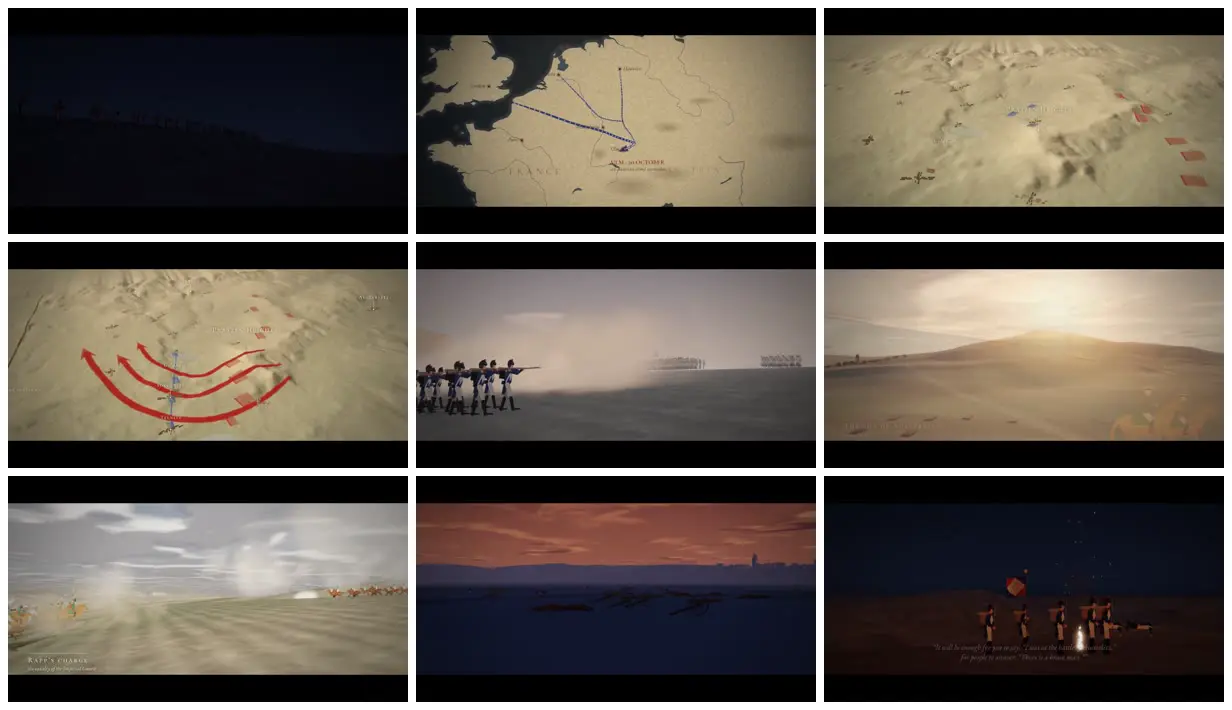
A letterboxed, painterly war film that alternates shaded relief maps of the battlefield with low, smoky ground-level scenes of flat, cut-out-like infantry, cavalry and guns, from a dark night camp to sunset over the frozen ponds.
- Color
- Muted parchment and sand for the maps, with blue routes and red unit blocks and arrows; gray-white powder smoke, blue-and-white uniforms, a gold sunrise, a salmon-and-slate sunset, and deep night blue.
- Type
- Small-caps serif titles with an italic line beneath and a thin rule above, set in the lower left ("The sun of Austerlitz", "about 9 a.m."; "Rapp's charge", "the cavalry of the Imperial Guard"); serif place names and red date labels on the maps; a centered italic quote to close.
- Framing
- A 2.35:1 letterbox throughout. Wide aerial views over the relief map with sweeping arrows, then low lines of soldiers in profile, small against the land and sky.
- Sound
- A synthesized score, sound design and offline Kokoro narration, all made in code, according to the creator and the repo.
- Structure
- Silhouettes on a ridge at night, the campaign map with routes converging on Ulm, the Pratzen Heights in relief, sweeping red arrows across the heights, French volleys in the smoke, the sun of Austerlitz, Rapp's charge, guns on a dark field under a sunset sky, and Napoleon's proclamation as the closing line.